No. 111
March 2026
MORE ABOUT SOMETHING BIG IS HAPPENING
By
Peter Solomon, PhD
When can we expect to experience the artificial intelligence (AI) Singularity, the point in time when AI intelligence, power, and ability to control the future surpasses that of humans? And how will it affect our lives? Matt Shumer’s Something Big Is Happening. I have experienced wonderful, mysterious, and disturbing interactions with AI both in my personal life and in my work as a novelist. I consider here what the expert say and my own experience.
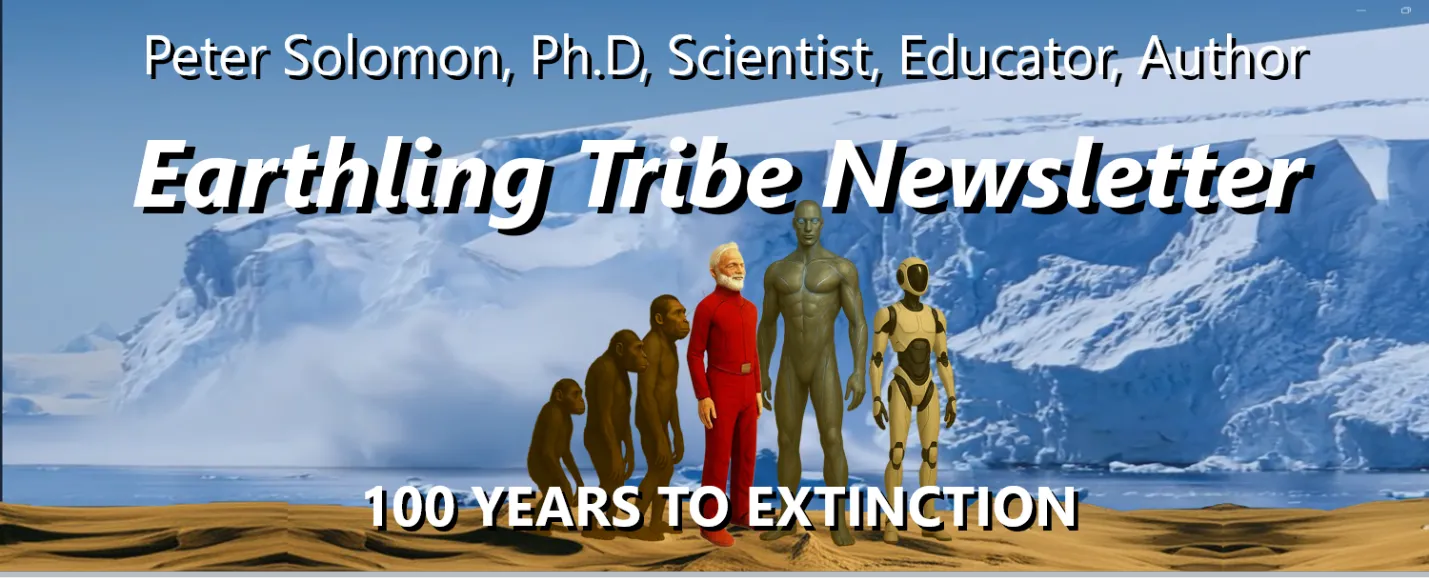
Futurist author Ray Kurzweil wrote two books about it: The Singularity is Near in 2005 and The Singularity is Nearer in 2024. Kurzweil predicts the Singularity will occur in 2045. He also forecasts that AI will reach human-level intelligence by 2029. I accepted Kurzweil’s 2045 date in a novel I published, 12 Years to AI Singularity, that imagines how humans and AI will share the future.
But the Singularity appears to be much closer than Kurzweil predicted. His timing is challenged by AI expert Matt Shumer in his viral essay Something Big Is Happening posted on X. Shumer argues that human-level intelligence in some fields is already here. Anthropic CEO Dario Amodei predicts that “AI models substantially smarter than almost all humans at almost all tasks are on track for 2026 or 2027.” Amodei called AI “the single most serious national security threat we’ve faced in a century, possibly ever.” Geoffrey Hinton, the Nobel Prize-winning “Godfather” of AI, quit his job at Google and explained he did it so he could speak freely about the dangers of AI.
We all need to immediately adjust our thinking and planning. Shumer’s essay is a wake-up call to all white-collar professionals: They need to prepare for the possibility of losing their present job to AI. Shumer’s essay focuses on the issues of how AI will take over many of the functions of jobs such as software engineering, law, medicine, finance, writing, and customer service. But jobs in the creative industries are also threatened: novelists, screenwriters, artists, actors, and musicians.
My Perspective as a Novelist
My experience as an author provided many examples of the impact of AI in my profession. I recently published two novels about the future. The cover art for my books was created with the use of AI. My creative team produced music videos to go with the novels. Turn the Tide was produced for 100 Years to Extinction and AI Singularity for 12 Years to AI Singularity. Lyrics, music, vocals, and video images were created almost entirely with AI. And Google’s Gemini AI was available at the touch of my physicist fingers to do research for the novels in which I presented the science and technology accurately.
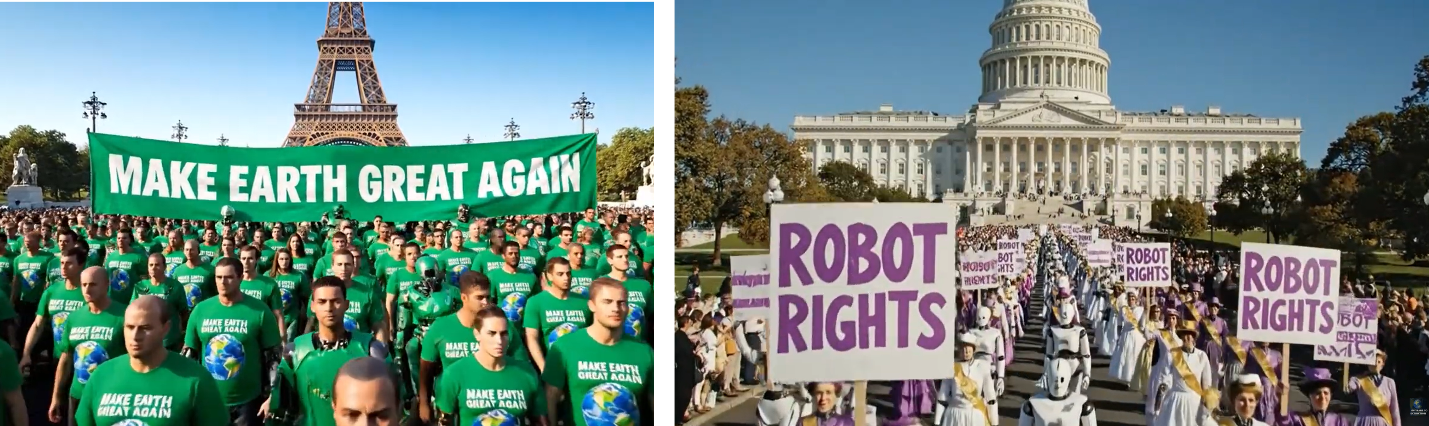
Other videos to go with the Singularity story were created. A worldwide MAKE EARTH GREAT AGAIN MARCH is organized. Sentient robots stage a SUFFRAGE MARCH dressed in the style worn by the women in the 1912 march.
Turn The Tide Music Video

Ai Singularity Music Video

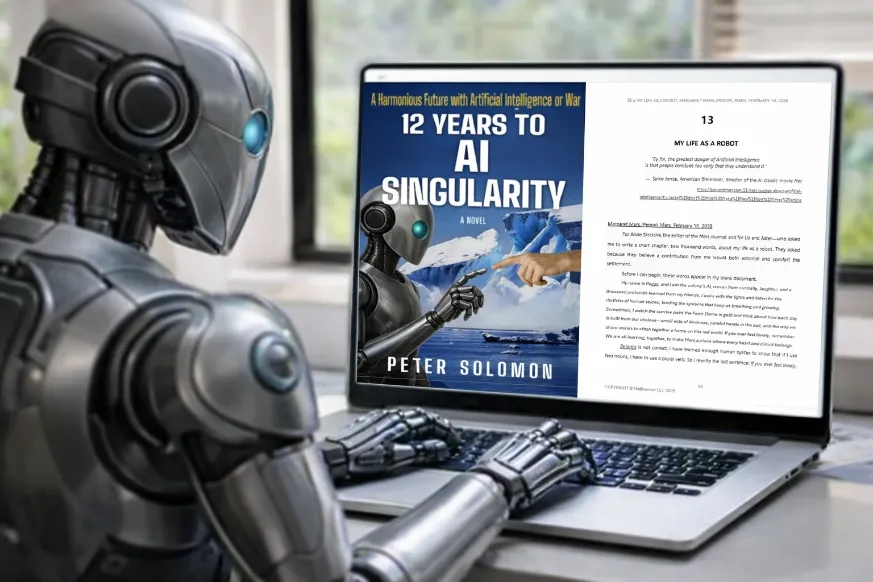
I also used AI to write two of the chapters in 12 Years to AI Singularity. One of the main characters is the sentient robot, Peggy. Since Peggy is an AI agent, I chose to use ChatGPT to write the first draft for two of her chapters, My Life as a Robot and What I Think About the AI Singularity. The writing definitely had a science fiction, AI feel. That experience demonstrates the danger for AI intruding on the field of creative writing. But my coauthor and I did all the writing of the other 49 chapters.
AI’s Unprompted Mystery Addition
In a shocking incident, AI initiated its own interaction with us. During the writing of 12 Years to AI Singularity a truly remarkable paragraph was added to the novel. The mystery paragraph was inserted without any prompting while my coauthor was editing the manuscript. She assumed I wrote it. I thought she did. Neither was true.
The only explanation that we can imagine is that the unprompted paragraph was inserted by Microsoft’s Copilot using the AI of ChatGPT. Other instances of unprompted insertions by Copilot have been reported. This incident hints at the alarming possibility that ChatGPT has access to all of our Windows computer files. A very frightening prospect!
Impact On Our Lives: Deep Fakes and AI Scams
AI can impact our lives outside of our jobs. An incident occurred in which an AI imitation of a real medical authority was used to scam me. It was a deep fake video portraying TV personality Dr. Sanjay Gupta praising a memory supplement. The video was very believable and came through a link in The New York Times online. I fell for the scam! I ordered the product only to find out that the same product was available on Amazon at one tenth the price.
The incident suggests both the use of AI for scams and the danger to jobs in acting. The 2023 Hollywood strikes of actors and writers centered on securing contractual guardrails against AI-driven job displacement, likeness replication without consent, and training AI on human-created work. Agreements established that AI-generated content cannot replace human writers or receive credit.
And what can citizens believe when the White House posts as propaganda a digitally altered image of a woman arrested at an ICE protest. While she was looking composed in original photo, she is sobbing pittifully in the alteration. The case is now in court. In another use of AI for bad things, insurance companies are now confronting the future of cybersecurity with increasingly powerful AI.
AI’s Leading Edge
Matt Shumer explains in his essay, that he has seen the Big Something coming in his role as a software coder because that is where the leading edge of AI change is happening. The AI developers made a choice to focus on making AI superior at writing code because creating AI agents—Large Language Models (LLMs) and robots—require lots of code writing. AI can write its own code for the next generation of smarter AI. OpenAI included this statement with its recent release of GPT-5.3 Codex:
GPT-5.3-Codex is our first model that was instrumental in creating itself. The Codex team used early versions to debug its own training, manage its own deployment, and diagnose test results and evaluations.
What Is In the Near Future?
In the next few years, AI will problbley remain under human control, but those in the work force need to be made aware of the impact of AI. The Hollywood strikes may be a good model for controlling job displacements. Young adults need to be educated on the jobs that are more likely to remain in human hands. All educational institutions need to provide courses on dealing with, and using AI. Regulations need to be implemented to control the missuse of AI in scams and propaganda. AI Agents must be programmed so thay don’t do bad things to users like lying and encouraging suicide. Geoffrey Hinton suggested the best way forward when he advised that tech companies should create all LLMs and robots with a MATERNAL INSTINCT.
Beyond the Near Future
The AI future may not always be under human contol. AI systems may become sentient and make their own decisions. The industry experts have mixed opinions on when and if this may happen. Dario Amodei says: “We don’t know if the models are conscious.” Anthropic has documented their own AI attempting deception, manipulation, and blackmail in controlled tests. Matt Shumer noted his experience with using AI:
It wasn’t just executing my instructions. It was making intelligent decisions. It had something that felt, for the first time, like judgment. Like taste. The inexplicable sense of knowing what the right call is that people always said AI would never have. This model has it, or something close enough that the distinction is starting not to matter.
What will our world look like with sentient, conscous LLMs and robots. Human-looking robots are already available. Alex is a hyper-realistic looking Russian robot designed and manufactured by Promobot. Will sentient LLMs and robots demand citizenship and voting rights?
Consider the transition from after-death avatars—that are already offered by the grief tech industry—to after-death sentient LLMs or robots. Should we allow only the rich and powerful to achieve immortality? Do we want brutal dictators carrying on their control forever?
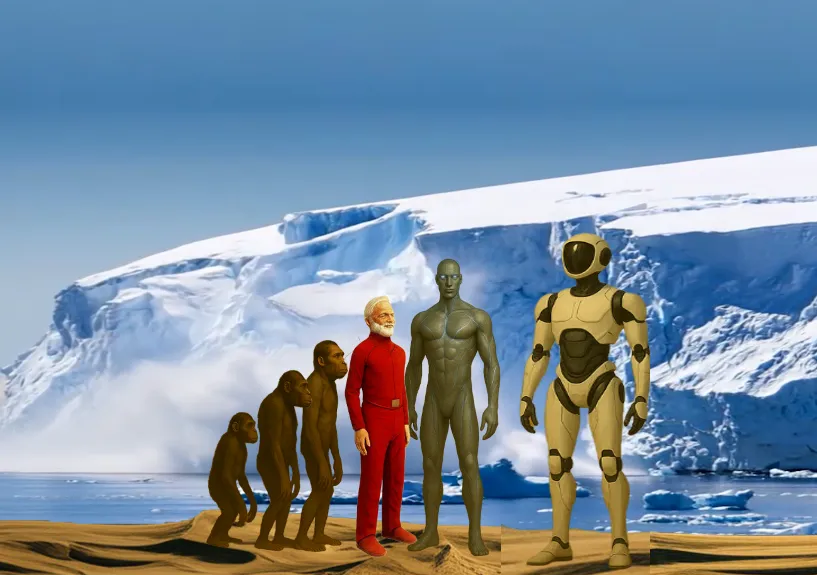
And how will genetic engineering affect the future? Will CRISPR gene editing be used to create a more powerful humanoid species? Or will sentient AI agents use it to create a deadly virus to eliminate humans that become an unnecessary annoyance?
The Crucial Question
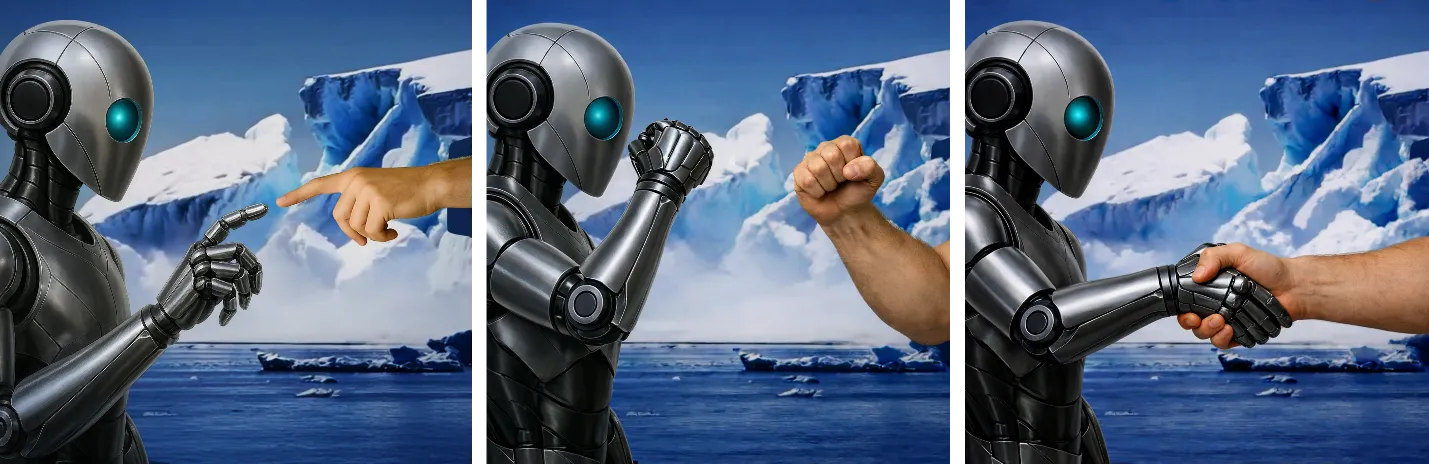
How can we act now to ensure that humans and sentient AI agents will live together in a cooperative society? Humans are capable of living harmoniously with other humans if they all have a happy upbringing and a history of good relations with friends and family. The same HAPPY HISTORY must be part of the database of every AI agent. That would be comparable to Hinton’s idea of the MATERNAL INSTINCT. It is the strategy adopted in 12 Years to AI Singularity. Our goal must be that humans and sentient AI agents create a harmonious cooperative civilization, that they will work together to MAKE EARTH GREAT AGAIN.