No. 108
March 2026
How a Torrent of Technology Is Changing Human Communication and Idea Creation
By
Peter Solomon, PhD
The most profound changes to human civilization have resulted from our ability to develop ideas. And the creation of ideas is intimately linked to our ability to communicate them.
It took humans 100,000 years to go from inventing speech to writing, to printing, and the ability to communicate ideas over long distances—radio, telegraph, telephone, and shortwave. But in just over a single lifetime, humans have developed a veritable torrent of technology for communication and idea creation: television, computers, smartphones, the Internet, the World Wide Web, social media, and artificial intelligence.
Has this torrent overwhelmed our ability to integrate, control, and adapt to these rapid changes? Or will these and other technologies, such as nuclear weapons and genetic engineering, lead to human extinction on Earth by 2117—as predicted by astrophysicist Stephen Hawking in 2017?
An Evolution Becomes a Torrent
Over the course of tens of thousands of years — starting 100,000 years ago — humans learned to use their unique combination of brain, throat, tongue, and lips to speak, and words became the medium for communicating ideas. 5,000 years ago in Mesopotamia. pictographic symbols were preserved on clay tablets for record-keeping. During the next 3,000 years, writing symbols and words on animal skins, papyrus, and finally paper followed. In China in 1040, Bi Sheng invented the first moveable type system; Johannes Gutenberg followed with the moveable type printing press in 1440. This was a milestone, enabling the wide dissemination of ideas through the mass production of texts. The 19th century ushered in the worldwide instantaneous spread of ideas and information with the telegraph, telephone, and short-wave communication.
Rapid Changes
The first half of the 20th century brought us radio, television, and computers at a digestible pace. But in the last fifty years, new technologies have emerged at an overwhelming pace: personal computers, smartphones, the Internet, the world wide web, email, social media, and artificial intelligence (AI).
One effect of this torrent is a profound generation gap: grandparents often have to call in their grandchildren to help with the technology. Another problem is addiction: young people are so addicted to the digital world that it sometimes leads to dangerous behavior. They’re not developing the normal social skills they need to interact with other humans. Additional dangers include the widespread growth and spread of scams, lies, propaganda, and conspiracy theories, as well as the recruitment of, and communication among, terrorists.
Losing Control of Information
In the past, our news came from reputable newspaper and broadcast media. These organizations were careful with what was published because they could be sued for libel, for distributing lies. Professional editorial boards reviewed their content. Today that’s far less the case. People often seek out news on social media, but social media is simply a platform; lies are just as easily distributed (by users) as facts. Propaganda is distributed with few controls and little liability. The most the platforms do in some cases is the removal of the material and suspension of the user.
On January 8, 2021, Twitter (now X) permanently suspended Donald Trump’s account (@realDonaldTrump), which had over 88 million followers. The action was in response to his tweets encouraging the violent demonstration and riot at the Capitol on January 6, 2021 and glorifying the participants. Then Elon Musk acquired the platform and reinstated Trump’s account. He was also the largest contributor to Trump’s 2024 reelection campaign. Trump also created his own social media platform.
What is Real?
The amazing benefit of all of this new technology is that we have access to all the world’s information, literally at our fingertips. But the problem is that we can no longer rely on what is true and what is false. We’ve had hoaxes before: in 1938, Orson Welles frightened many gullible members of his American audience with a radio broadcast called “The War of the Worlds” about a fictional Martian invasion. But that was a highly unusual event, and was soon clarified as fiction. Today, content based on falsehoods reaches us daily and it is far more difficult to determine what is actually true.
How can one believe anything one sees when the White House itself issues photos that have been altered with AI? Consider the recent example of civil rights attorney Nekima Levy Armstrong. The White House issued a manipulated photograph showing her arrest in which she’s crying pitifully. In the real photograph, she’s clearly defiant.
A recent scam employs a deepfake video featuring an unauthorized AI duplicate of TV personality and medical expert, Dr. Sanjay Gupta. In the deepfake, Dr. Gupta is explaining the history, clinical trials, and benefits of a supposedly revolutionary supplement to promote brain health and memory improvement. It’s a long, well-made, and persuasive video, and ends with an order form to buy the product, which it claims is in very limited supply. There is such a product: Brain Defender, and it is available on Amazon. In the scam video, it’s being sold at ten times the price.
The Impact of Propaganda
The ability to quickly and widely distribute propaganda by the government is a significant threat to democracy. The AI altering of the photograph of Nekima Levy Armstrong by the White House is one example. A second recent example is the official statements—made before any investigation was done—about the killings of Renee Good and Alex Pretti. Both were labeled by government sources as domestic terrorists who posed a lethal threat to the officers. The propaganda statements were in complete disagreement with multiple bystanders’ videos of the events.
The Biggest Danger: AI.
Stephen Hawking warned: “The development of full artificial intelligence could spell the end of the human race.” Besides the problems of AI agents taking jobs away from humans, there’s the question of controlling this technology. That could be the biggest danger of all.
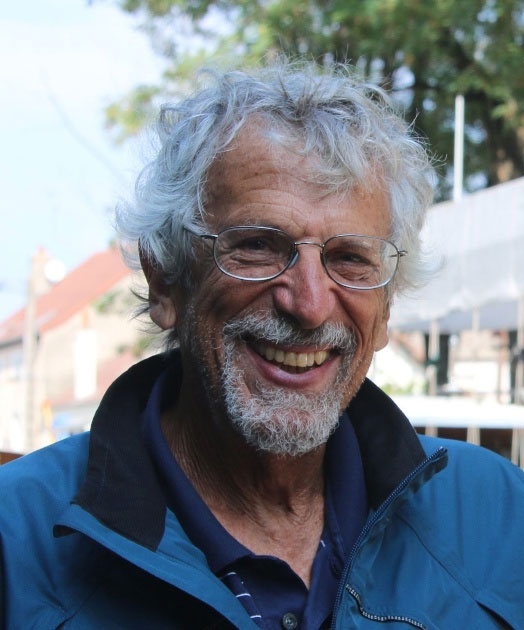
Dr. Peter Solomon
Dr. Peter Solomon is a scientist, educator, successful entrepreneur, and author. His current mission: to warn the next generation about the threats posed by unchecked science and technology. He is sounding an alarm about the potential tyranny of technology through his novels, 100 Years to Extinction and the sequel, 12 Years to AI Singularity, on his website, 100yearstoextinction.com, and on YouTube, Facebook, The Earthling Tribe, Instagram, and other social media.